I’ve always been highly interested in outdoor education and have tried to incorporate many items from nature into my classroom. My friend Miss W. and I attended a Growing up WILD workshop one Saturday in May. The workshop discussed a lot of local natural resources, plants, and animals. And *Bonus*… we left with a fantastic resource book! You can access many of these resources and find more info on attending a Growing up WILD workshop below:
Each year, I get slightly more adventurous in my nature endeavors. This year some of my newest projects are:
-Studying soy bean plants donated by a local farmer
-Observing a nearby corn field at harvest time
-Engaging my class in a yearlong seasonal study of our school’s pin oak trees
-Growing mushrooms out of a box in our classroom
-Embarking upon a journey towards building an outdoor classroom at our school
In addition to these projects, we are accumulating a multitude of leaves, seeds, bark, and other bits of natural matter from our outdoor experiences.
This year, I hoped to collect a nice assortment of acorns that we could use as manipulatives throughout the year. I requested that my kinders go outside with their families to collect acorns to add to our stockpile. I stored them in a large clear pretzel tub and shook them a couple times a day to help them dry out. I knew there would be moisture and also planned on laying all of the acorns out so they wouldn’t grow mold.
After my collection was big enough, I did just that. However, upon dumping them out into a large box lid, I realized that mixed in with my beautiful mass of acorns were many fat, wriggly larvae. The acorns had small, perfectly round holes from which these little guys emerged.
I may or not have gagged a little…but thankfully, my kinders were not in the room.
My stomach quickly recovered from this surprise and I began thinking about how much fun my kinders would have watching these squiggle-bugs. I headed directly to the computer to do some research.
I learned that they were weevil larvae. I also learned that I probably should have washed and baked my acorns to prevent them from hatching and eating tiny holes through our math manipulatives.
The next morning, I asked my kinders if they were interested in picking the weevil larvae out at recess.
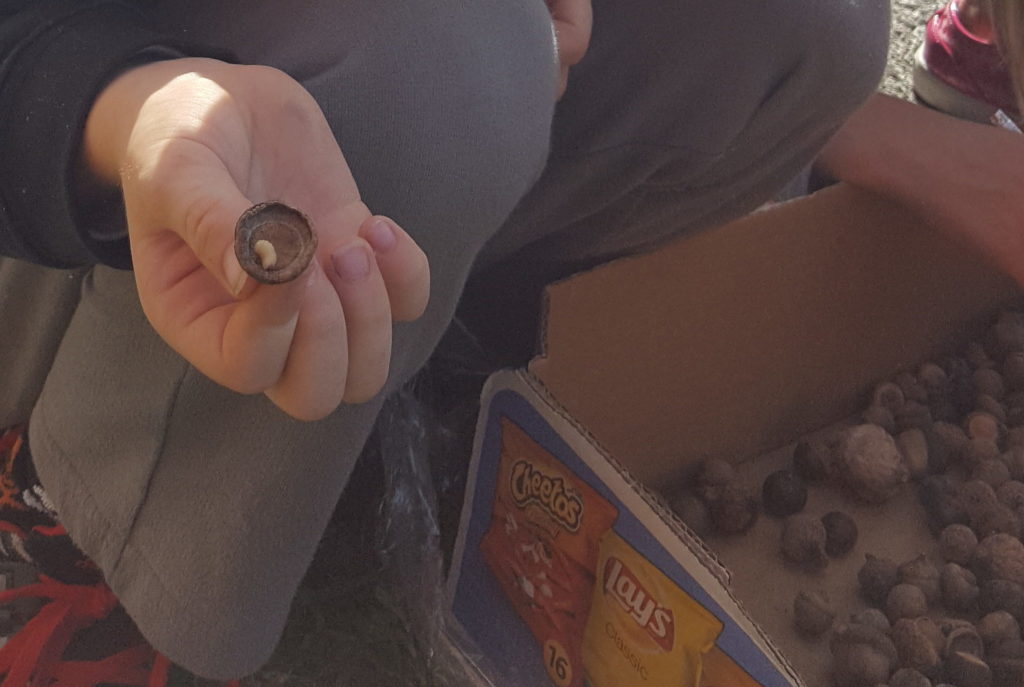
So. Many. Hands. I chose 5 or 6 of my most eager kinders to combat these tiny intruders. With pencils in hand, they combed through the heap of acorns, plucking out larvae left and right. They found that some weevil larvae were white, some reddish, yet they all had a little bit of black on the ends. They discussed the varying sizes and determined that they must have hatched at different times, therefore, some were older than others. They noticed that some were shiny, yet some looked like they were drying up in the box. And mostly, they noticed that these were very interesting creatures worthy of investigation. The kinders cooperated and examined until all of the weevil larvae had been eliminated.
It was quite an ordeal- A learning experience for sure. These gross, fat, wriggly little creatures were certainly worth a second glance.
Here is the simple way to avoid my happy mistake…
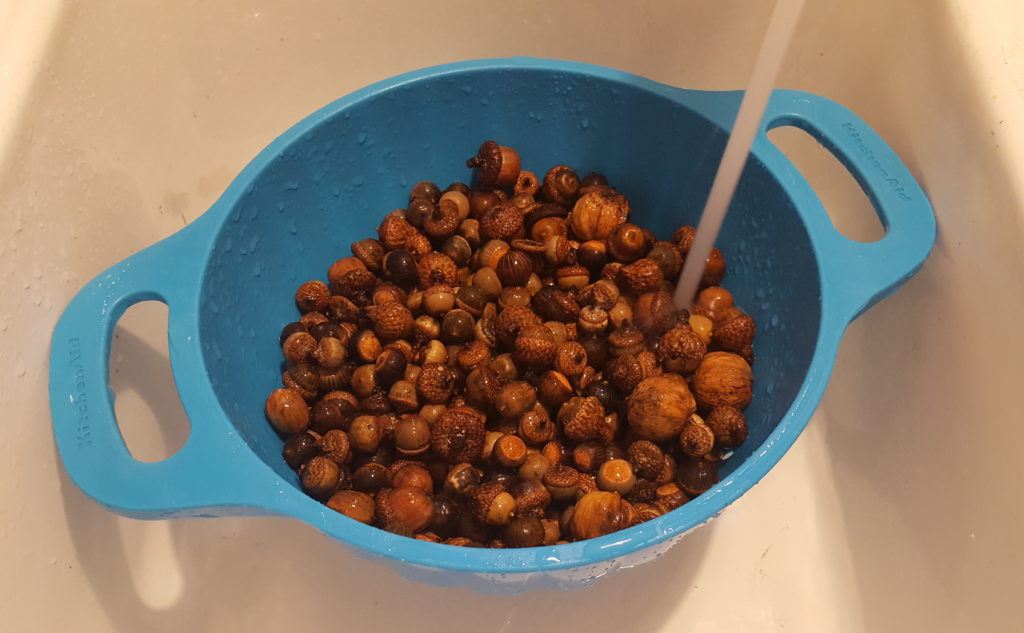 wash, then pat dry.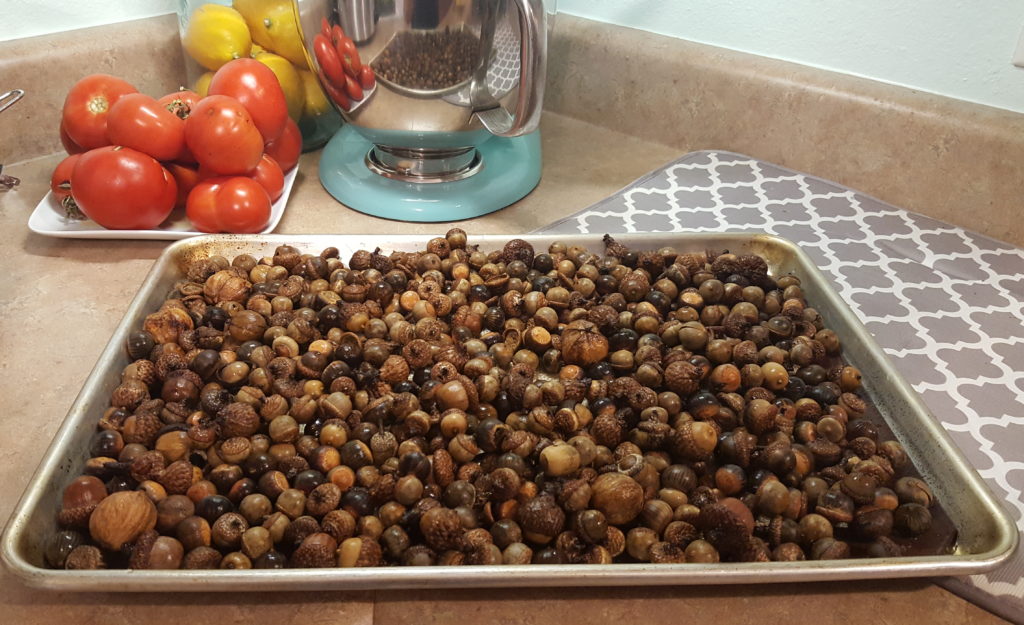
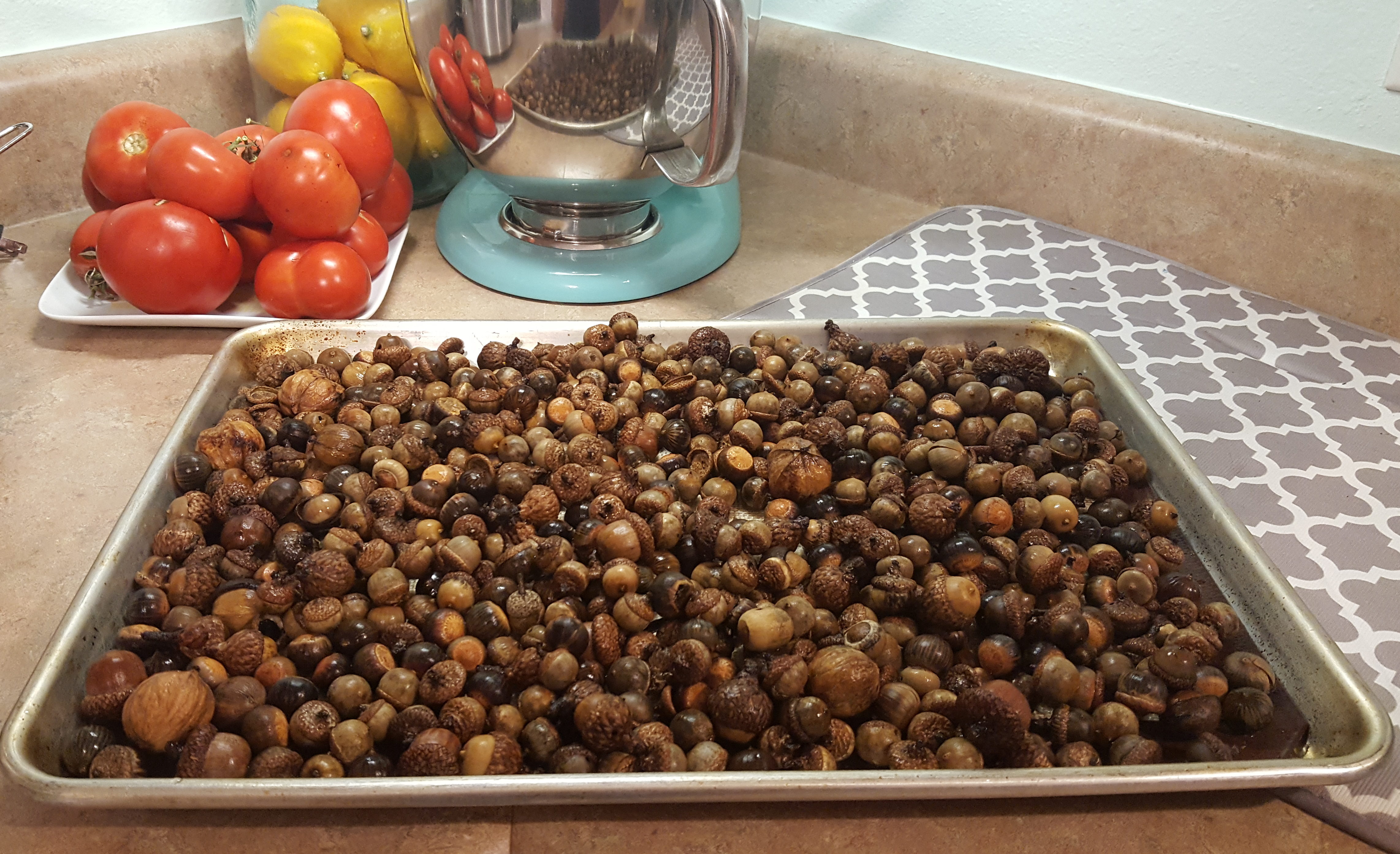
bake. (I baked them about 250 degrees for 2 1/2 hours and I haven’t had any mold or weevil issues since!)
Be the first to comment