
Mystery Science

Let’s solve our first mystery…
What is MYSTERY SCIENCE?
We’ll start by first covering what Mystery Science is not…
Mystery Science is NOT:
-text-book based
-outdated and boring
-a curriculum that requires a lot of reading/research/planning before implementing
-“just” learning videos
-all-inclusive -You do need to provide the necessary supplies for many of the projects, though they are mostly common objects that teachers (or someone in your schools) probably have stuffed in a closet…
-set in stone- Mystery Science encourages feedback on how they can make the learning experiences even better!
Mystery Science IS:
-Interactive and hands-on
-technology-based (but very simple to navigate and utilize, even for those who aren’t tech-savvy)
-Created BY teachers FOR teachers
-full of wonderful film footage and photographs leading to engaging conversations
-linked with NGSS (Next Generation Science Standards)
-integrated with literacy resources such as Read-Along Mysteries (science readers) and extended lessons
-(currently) free to try for the school year (as long as you haven’t tried it before)
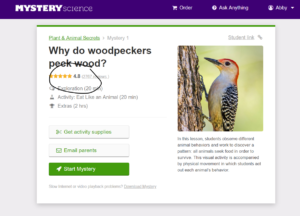
This is how Mystery Science looks upon logging in:
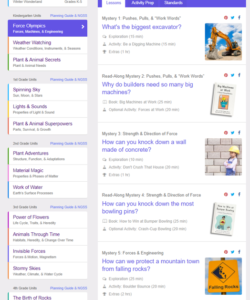
Mystery Science breaks the units down by grade level.
Each mystery lesson is based around an inquiry-based core question.
The exploration video gets students interested and involved in a thought-provoking discussion about science concepts.
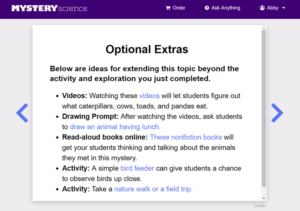
Mysteries may contain: discussion questions, “letters” from Doug, videos, activities, vocabulary, movement activities, hands-on experiments or investigations, a summary of the lesson, an assessment, and lots of optional materials (videos, texts, websites, etc)
I taught most of the available kindergarten lessons last year as our science committee was piloting and trying to make a decision on a science curriculum. This year, we are doing a trial year for all of our teachers.
Upon starting my 2nd year of Mystery Science, I was incredibly excited to see the addition of…
the Read-Along Mysteries! (added to the Kindergarten and 1st grade units)
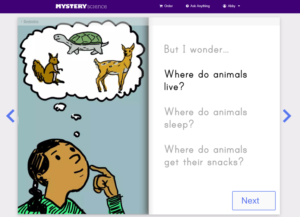
These readers also do a great job integrating texts that are full of appropriate sight words, simple illustrations, photographs, Stop and Talk questions, video clips, and movement opportunities. Doug even gives students a preview of the stories/activities before you begin.
With an account, you also have access to mini-lessons that are often season or holiday related and for any grade-level. These are all under around 7 minutes long with talking points (and some with extended activities).
What are our teachers saying about Mystery Science?
“The exploration video was engaging. It gave great detail into exploring the mystery question. My student’s really liked how “Doug” used comparisons to explain an abstract idea. My students loved the activity. The activity answered a lot of questions about why they only see certain stars/constellations during specific seasons. I like how “Doug” allows time for students to discuss with a partner.”
“Great and engaging activities; kids remembered activities and referred to them in the assessments.”
“Understandable to students, engaging question. The examples used were very understandable for my students. They were able to tell me what they learned and talk about it as we worked on the activity. I was very impressed.”
“The first part of the experiment was awesome!! So were the videos – we had several chins drop when we watched some of the chemical reactions on the videos.”
Is Mystery Science perfect? Well…no. But if you find a science curriculum that is, let me in on it!!
A few of the comments about weaknesses or issues that have come up:
“We asked parents to donate a lot of the materials needed for the mystery. I think this is okay every once in a while, but asking them all year to do this is a little excessive.”
“The readings can be difficult for students not on grade level.”
“Some of the experiments we had to do as a demonstration rather than having each kid do it because of the cost of the materials.”
“I gathered food items around my house as well as a few at the store to use to grow the mold.”
“Nothing!”
You can see that they mostly involve materials, so naturally, those will be an aspect of this curriculum that you’ll want to look at closely.
If you’re interested in what teachers around the country are saying, each mystery has reviews readily available for your reading pleasure!
And can I just say that Doug does a fabulous job of encouraging students to be curious, ask questions, and seek answers about the world around us! This is a skill that if taught early, can create life-long curious and voracious learners!! I have a feeling that Mystery Science, itself, is FULL of curious learners who are excited and willing to learn from other teachers across the country!
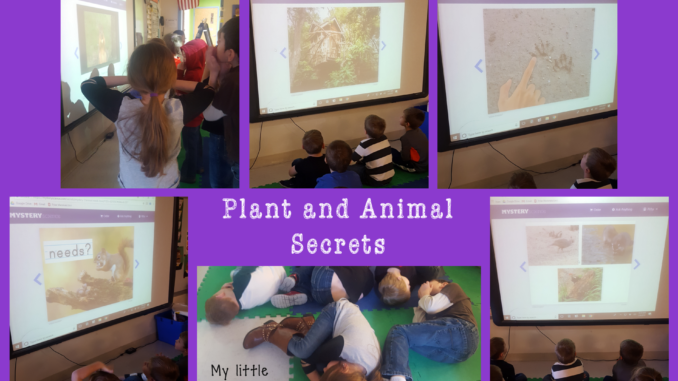
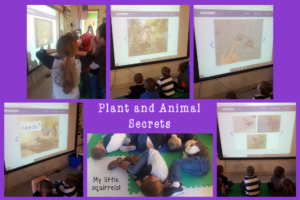
I’ll leave you with a few photos of my kinders (I strategically took these so no faces were showing, so, unfortunately, you can’t see their gigantic smiles!).
Be the first to comment