
I can guarantee that this topic will not be as exciting or enjoyable as watching The Wizard of Oz… And quite honestly, if you are an anxiety-ridden teacher, lions & tigers & bears might be a preferred choice over observations and goals and evaluations!
Teacher Evaluations
Every school district seems to have their own teacher evaluation system in place, however, a very popular choice in the past few years has been the Danielson Framework. If you aren’t familiar, you can learn more about it here.
In short, it is a set of components of instruction organized with a lengthy and detailed rubric with 4 domains full of standards.There are definitely some good things about it, and some trickier areas. It seems to be ok, though, especially since we have awesome school administrators.
Here is the trickiest part…All grade-levels are evaluated using the same rubrics. Think about that for a sec.
Every grade-level…evaluated with the same rubric.
This is why it is a little bit of a stress-inducing topic (…nevermind all the goal-setting and observations and meetings involved).
If you’re in the same boat, check out these resources!
These can be very helpful in trying to decipher what might skills or actions might demonstrate each standard, even if you don’t use Danielson. Early childhood and middle school/high school are very, very different beasts.
The following rubrics give suggestions for early primary grade activities/actions to meet each criterion. I basically use these to help me decide which artifacts I should submit, They can also serve as talking points when you have discussions about your self-ratings.
Pennsylvania Rubric
New Jersey Rubric
Here are a few ideas that my teacher friends and I love for younger grades!
These not only help the classroom to run more smoothly (and more independently), but they are also great artifacts to prove that you are meeting specific teaching standards and allowing for as much student-led activity as possible (which can be a bit tricky in early childhood classrooms).
I take photos of these items if my principal hasn’t already documented them through observations. We upload them digitally, but I know some teachers create an artifact binder.
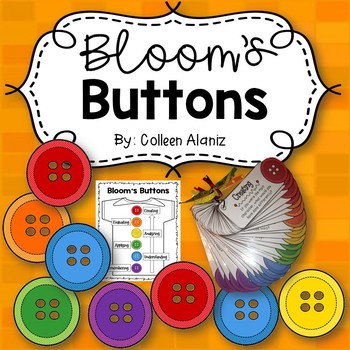
Bloom’s Buttons are a super simple way to consistently ask higher-level questions during or after read-aloud stories.
Buy some plastic buttons and work these in each day to get in the habit! (Even better, have them turn and talk to discuss the questions with a friend before calling someone)
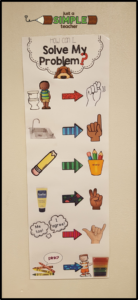
Katie Mense on TPT has a great FREEBIE which I used to create my own version of a Problem Solving poster. These easy picture directions allow for independence and they quickly allow students to decide what action to take in order to meet their need.
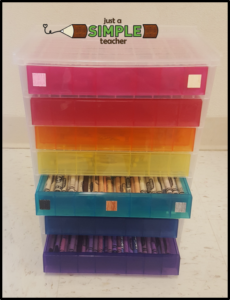
Our crayons are sorted by color (see photo below). If students need a specific color, they simply get up and get it from this box.
The V is for Vaseline/petroleum jelly – In the Midwest, it gets awfully dry and itchy in the winter, so this helps to avoid a class full of kids with sore, cracked and bright red lips.
We use the “hang ten” sign to show that students agree with someone else, or that they were thinking the same thing- this deters some of the blurting out.
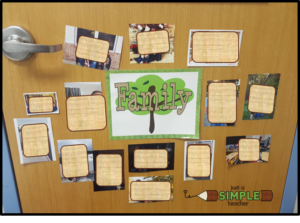
I love having a family tree or family wall. This is just another way to form a connection from school to home.
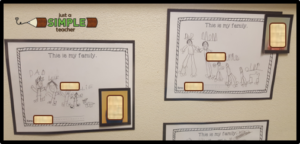
Students also create a family portrait that is laminated and hung up with their photograph. They are SO proud to have these displayed.
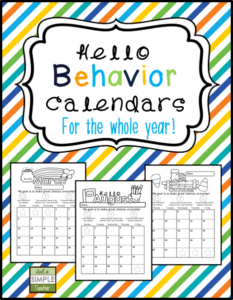
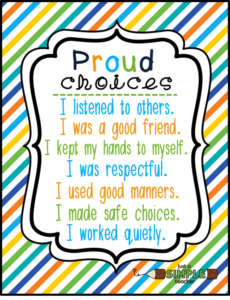
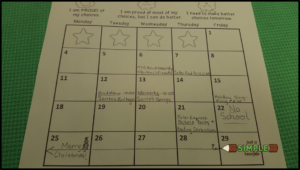
This is the first year that I have used self-assessment behavior calendars.
Simply teach students about “proud choices” and discuss any of their less desirable choices to help them think about and understand why they could and should have made better choices.
Even kindergarten students are able to decide whether or not they are proud of the choices they made. I do also send a note home letting parents know if/why their child decided that they didn’t make proud choices.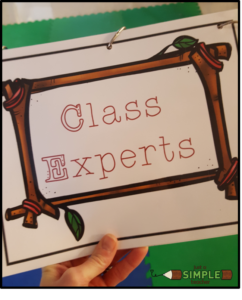
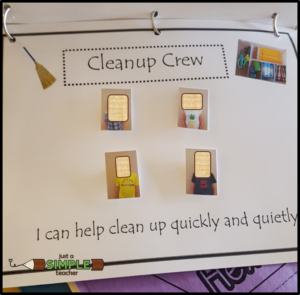
Expert Book Video <— This video explains this amazing little book. Just another tool to encourage independence (and to deter students from coming directly to the teacher to “solve” their problems). (thanks to my teaching buddy, Emily, for making this book for our classes).
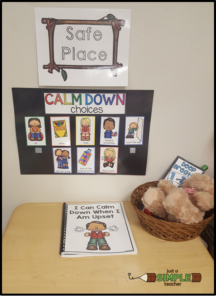
I LOVE having a safe place for my little friends to relax after a tricky moment.
They may be “off-task” for a few minutes here, but it generally keeps them from melting down and losing who-knows-how-long of their work time!
Here is the link for this specific printable pack, however, I had a hard time choosing from all the great picks on TPT. I also throw in a teddy bear, water tube, squish toys, etc…
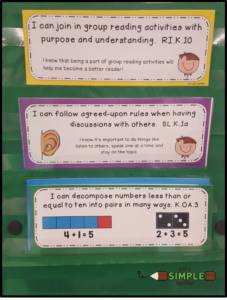
Create-abilities has great “I can” statement cards.
These are perfect for hanging up a daily or weekly focus (usually 3 or 4 for my class).
I read these with the class very quickly and explain that they are goals for the week.
Again, just another way to show that you are, indeed, discussing goals and purposes with your students.
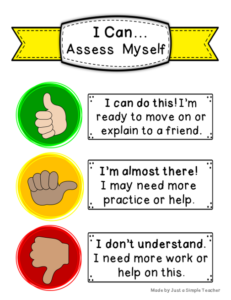
This self-assessment poster with explanations is an easy way for students to show understanding during lessons or instructions. This is an assessment tool that I use often with my kindergarten students.

edWeb is a free professional learning and social network for the education community
I LOVE edWeb! There are some fantastic webinars for FREE!
I take a screenshot of the webinars that I have completed and I also enter that as an artifact for evaluations.
**Bonus- some states allow you to earn CPDU’s from the webinars (unfortunately, mine does not, but I still really enjoy participating in them!).
Any other ideas out there? 🙂
These are all very easy to implement NOW and they really don’t take time away from your normal routines while providing you with further documentation of how you meet each teaching standard.
Happy Teaching,
Be the first to comment